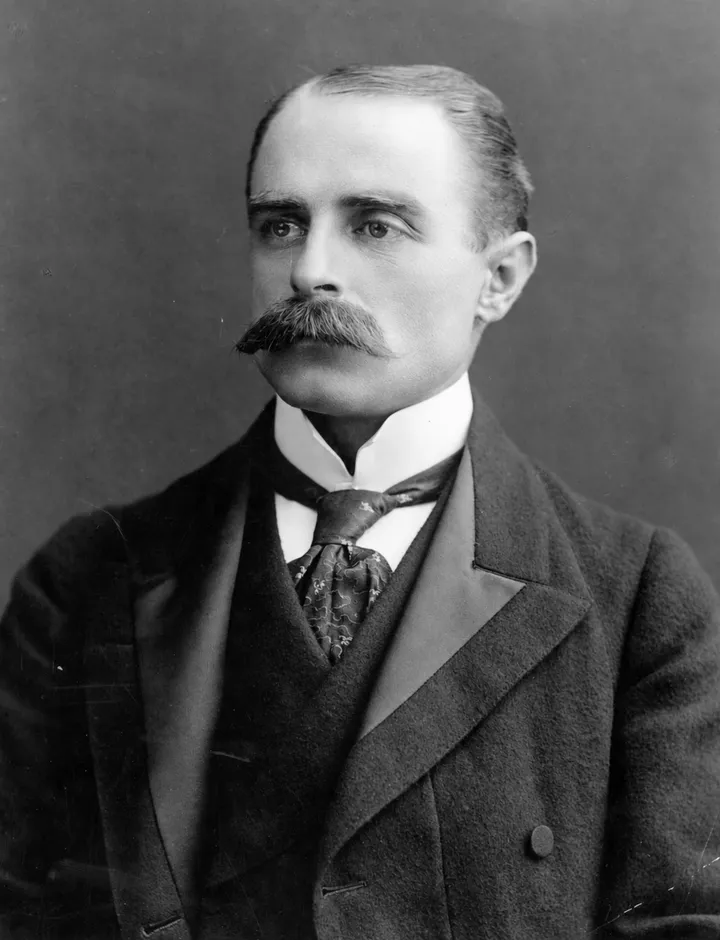
Lieutenant-Colonel Sir Francis Edward Younghusband · KCSI, KCIE
Across Asian frontiers, between exploration and imperial policy.
Younghusband travelled through Asia as an officer and observer in a world where a route could be a geographical discovery and a strategic question at once. His books carry both kinds of attention.
In 1921, Mount Everest was still a fortress of unknown ridges, glaciers and immense altitude. Britain sent an expedition not to conquer Everest, but to discover whether a way to its summit existed at all. They returned in 1922 to make the first determined assault upon the mountain, and again in 1924 for the expedition that would become inseparable from the names of George Mallory and Andrew Irvine.
Francis Edward Younghusband was born at Murree on 31 May 1863, the son of Major-General John William Younghusband, and was educated at Clifton College and the Royal Military College, Sandhurst. He was commissioned into the 1st Dragoon Guards in 1882. In the 1880s he travelled through Manchuria, crossed the Gobi and made his way from Chinese Turkestan to India over the Old Muztagh Pass; later journeys took him into the Pamirs and the borderlands north of India.
After service at Hunza and Chitral he was appointed British Commissioner to Tibet; the mission reached Lhasa in 1904. He was Resident in Kashmir until he retired from the Indian Service in 1909. As President of the Royal Geographical Society from 1919 to 1922 and first chairman of the Mount Everest Committee, he helped organise the reconnaissance of 1921 and the expeditions that followed, and in 1926 he published his account of the three. He founded the World Congress of Faiths in 1936 and died at Lytchett Minster, Dorset, on 31 July 1942.
Honours and distinctions
Prize · 1890MacGregor Memorial Medal
Prize of the United Service Institution of India.
Prize · 1890Royal Geographical Society · Founder’s Medal
For the journey from Manchuria and Peking to Kashmir and his route surveys. Source conflict, open: the RGS list gives 1890, the obituary head 1891.
Order · 1891Order of the Indian Empire · Companion (C.I.E.)
Open: the Gazette notice has not been retrieved.
Decoration · 1901Kaisar-i-Hind Medal · First Class
For public service in India.
Order · 1904Order of the Indian Empire · Knight Commander (K.C.I.E.)
Announced in the London Gazette of 16 December 1904 for services connected with the Tibet Mission; the India Office List gives 1 January 1905.
Further distinctions
Prize · 1905Royal Scottish Geographical Society · Gold Medal
Contemporary award name; renamed the Scottish Geographical Medal in 1933.
Order · 1917Order of the Star of India · Knight Commander (K.C.S.I.)
Announced in the London Gazette of 1 January 1917.
Prize · 1922Charles P. Daly Medal
Awarded by the American Geographical Society.
Explore the life and work
Origins and early years
In 1890 he received the MacGregor Memorial Medal of the United Service Institution of India and the Founder’s Medal of the Royal Geographical Society, the latter for his journey from Manchuria and Peking to Kashmir and his route surveys. He moved to the Indian Political Department in the same year and was made C.I.E. in 1891.
From the frontier to the Mount Everest Committee
The mission to Tibet in 1903–04 made his name inseparable from armed imperial intervention. He later served as president of the Royal Geographical Society and wrote increasingly about spiritual and international questions.
He was Political Officer at Hunza in 1892, Political Adviser at Chitral in 1893–94, Resident at Indore from 1902 and, after Tibet, Resident in Kashmir from 1906 to 1909. The K.C.I.E. followed in 1904 for services connected with the mission, and the K.C.S.I. in 1917.
The literary work
His travel writing combines landscape, routes and political judgement. It gives access to the concerns of a British officer moving through territories whose futures were being contested.
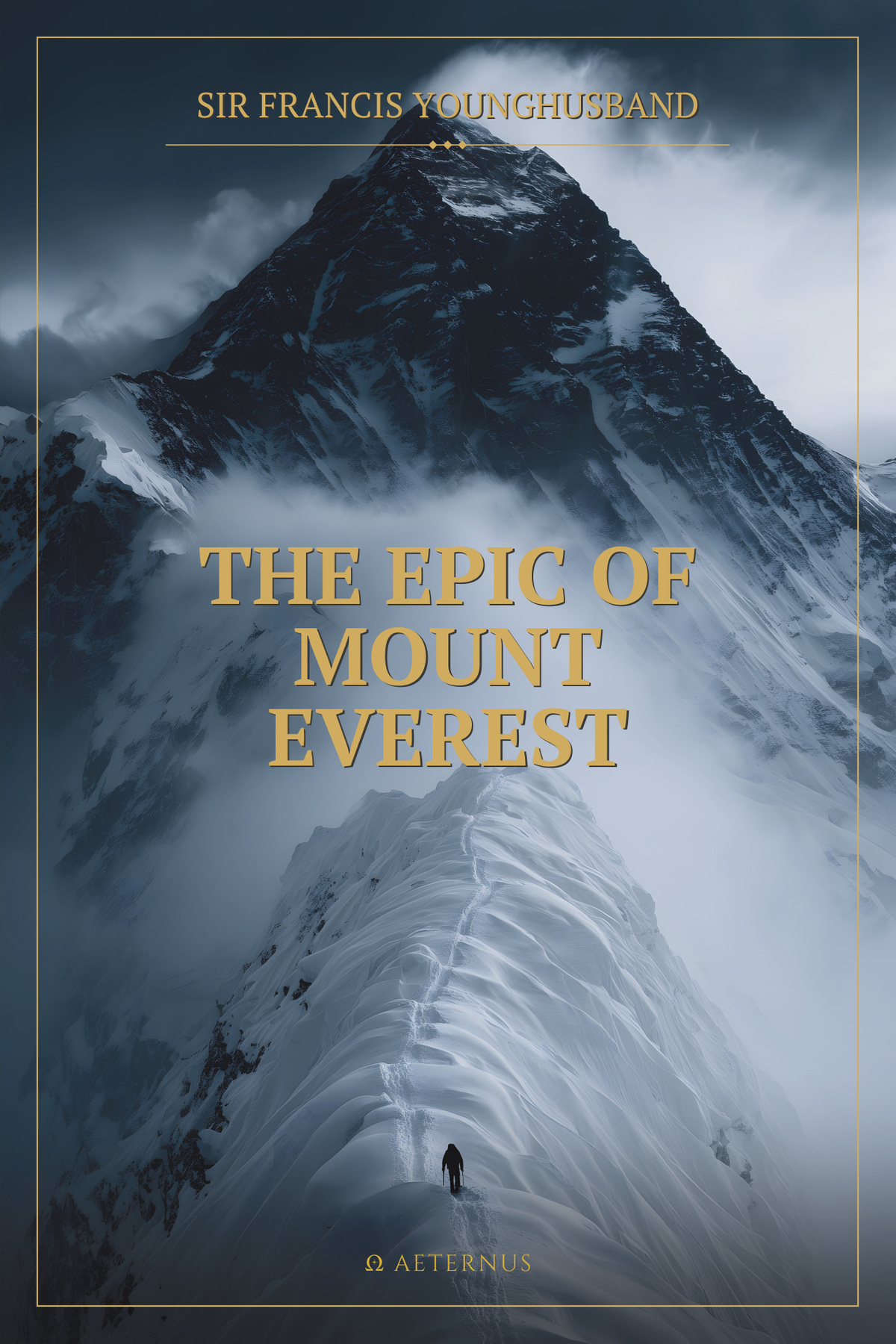
<i>The Epic of Mount Everest</i> (1926) gathers the expeditions of 1921, 1922 and 1924 into one narrative, by the man who had been first chairman of the committee that sent them.
The legacy
Younghusband’s life shows how geographical curiosity could accompany imperial power, and how a career could subsequently turn towards wider religious aspirations. The earlier and later phases both require attention.
A life in dates
Born at Murree
Lieutenant, 1st Dragoon Guards
Journeys through Manchuria, the Gobi, Chinese Turkestan and the Pamirs
Indian Political Department; MacGregor Memorial Medal; Founder’s Medal (year disputed)
C.I.E.
Political Officer, Hunza; Political Adviser, Chitral
Kaisar-i-Hind Medal, First Class
British Commissioner, Tibet Mission; K.C.I.E. announced 16 December 1904
Gold Medal, Royal Scottish Geographical Society
Resident in Kashmir; retires from the Indian Service in 1909