A borrowed identity, and a real argument for the living forest.
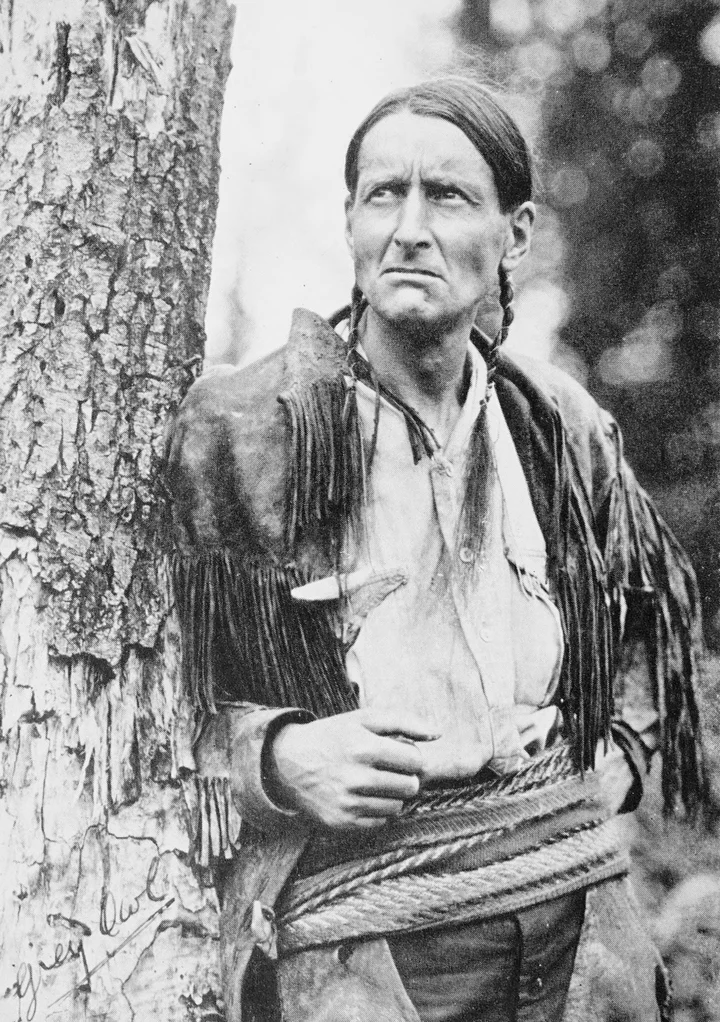
Grey Owl’s public life rested on a concealed origin. Born Archibald Belaney in England, he became a celebrated spokesman for the Canadian wilderness under an assumed indigenous identity. The deception and the conservation work both belong to his history.
Beyond the last road lay another Canada. It was a country of forest and muskeg, rivers and cold lakes, trap lines, winter camps and long distances travelled by canoe, snowshoe and dog team. Men who lived there depended less upon possessions than upon judgement: the ability to read weather, follow a trail, repair what had broken and endure what could not be avoided.
Anahareo’s place in that history is essential. Her influence helped turn a trapper towards the protection of beavers and the writing that made him widely known.
Explore the life and work
Origins and early years
Belaney left Hastings for Canada in 1906. Life in northern Ontario brought trapping, guiding and close contact with people whose knowledge helped him inhabit the country.
The course of a life
The national parks gave his work a new setting in 1931. Public speaking and books carried a conservation message beyond the cabin and the lake, while the Grey Owl persona obscured the author’s actual background.
The literary work
Men of the Last Frontier combines knowledge of woodland life with a plea for its preservation. It is written at the crossing of an older trapping world and a growing public concern for wildlife.
The legacy
The force of the writing survives within a damaged claim to authority. Reading it with Anahareo’s contribution and Belaney’s origins in view restores the complexity of its making.