AETERNUS

Life and work

Charles John Melliss

1862–1936

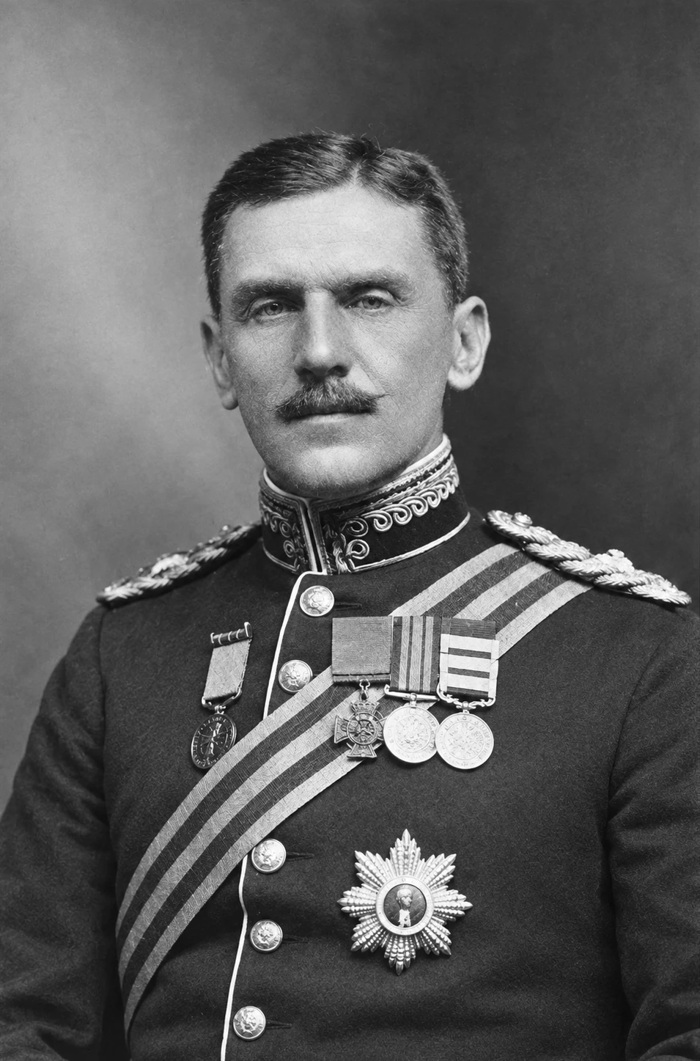
Major-General Sir Charles John Melliss · V.C., K.C.B., K.C.M.G.

From the thorn country behind Berbera to the surrender at Kut.

In 1895 Captain Melliss of the 9th Bombay Infantry published the record of a lion hunt behind Berbera. Five years later he led a charge into the bush at Obassa and won the Victoria Cross; in 1916 he went into captivity with the garrison of Kut.

Return to the editions ↓
Charles John Melliss

English-language editions

The complete text of 1895 with Cecil Aldin’s drawings and the author’s photographs, his record of service and honours, a register of the caravan and a glossary.

Lion-Hunting in Somali-land (Annotated)

Green Series

Lion-Hunting in Somali-land (Annotated)

Across the Gulf of Aden from Arabia lay a country of thorn, dry river-beds and waterless distance. From Berbera, Captain Charles John Melliss of the 9th Bombay Infantry went up-country towards the Haud with ten camels, twelve Somali men, two donkeys, an Abyssinian pony and provisions for two months, in search of lion; the closing chapters follow him on horseback, spear in hand, after the African wart-hog.

Available now

Explore the edition →

Life and work

A life in context

Charles John Melliss was born at Mhow in 1862 into the military world of British India, the son of a general of the Indian Army. He was commissioned in 1882, passed into the Indian Army two years later, and was a captain of the 9th Bombay Infantry when Lion-Hunting in Somali-land appeared. Service followed in East Africa, on the North-West Frontier and with the West African Frontier Force in Ashanti, where the charge at Obassa on 30 September 1900 brought him the Victoria Cross.

He commanded the 53rd Sikhs (Frontier Force) until 1910, became major-general in 1912 and in 1914 took the 30th Indian Infantry Brigade to Egypt and Mesopotamia. He held Shaiba against the Ottoman attack of April 1915, fought at Nasiriyah and Ctesiphon and went into captivity after Kut. On the road north he tried to help the British and Indian soldiers left behind by the prisoner columns; the K.C.M.G. was conferred while he was still a prisoner. He retired in 1920 and was Colonel of the 53rd Sikhs until 1934.

Honours and distinctions

Further distinctions
Explore the life and work

Origins and early years

Born at Mhow, in Central India, on 12 September 1862, the son of Lieutenant-General George Melliss of the Indian Army, he was educated at Wellington College and the Royal Military College, Sandhurst. He was commissioned into the East Yorkshire Regiment in 1882 and transferred to the Indian Army in 1884.

The course of a life

Active service began almost as soon as the book appeared: East Africa in the M’wele operations of 1895–96, then the Kurram Valley and Tirah on the North-West Frontier in 1897–98. In May 1899, outward bound in the steamer Sokoto, he went overboard off Cape Coast Castle after a member of the crew in water known for its sharks and received the bronze medal of the Royal Humane Society.

With the 1st Battalion of the West African Frontier Force in the Ashanti campaign of 1900 he saw the enemy gather to stand in the bush at Obassa, collected the men at hand and led them into the cover. He ran one opponent through with his sword and was shot through the foot by another. The Gazette of 15 January 1901 published the Victoria Cross for that charge and for three earlier occasions in the same campaign.

A lion mauled him in East Africa in 1903 and nearly cost him an arm. He commanded the 53rd Sikhs (Frontier Force) from 1906 to 1910, was made a Companion of the Bath in 1911 while commanding the Fyzabad Brigade and became major-general in 1912.

In October 1914 he sailed from Karachi with the 30th Indian Infantry Brigade, which served on the Suez Canal before going on to Mesopotamia. In April 1915 he commanded at Shaiba, where the Ottoman attack on the Basra position was driven off. He fought on the Euphrates at Nasiriyah and at Ctesiphon, was appointed K.C.B. in October 1915 and shared the siege of Kut until the surrender of 29 April 1916.

In captivity he found sick and starving soldiers left behind by the prisoner columns and did what his rank still allowed for them. In August 1917 he wrote that it was beyond his powers of description to convey what he had seen. The K.C.M.G. followed in August 1918 for services in Mesopotamia. He retired in 1920, was Colonel of the 53rd Sikhs from 1921 to 1934 and died at Camberley, Surrey, on 6 June 1936.

The literary work

Lion-Hunting in Somali-land is the book of a young officer: a caravan of camels and Somali men from Berbera towards the Haud, the reading of spoor and the night watches in a zareba, and in the closing chapters the pursuit of the wart-hog with the spear. It was written before the Victoria Cross and the commands of the Great War and is to be read in that order.

His diaries and letters from Mesopotamia and captivity, held by the National Army Museum, belong to another phase of the same life.

The legacy

The hunting book and the later record should be kept in their chronological proportion. Melliss is remembered for Obassa and for Kut; the care he tried to give to the prisoners after the surrender belongs to his military reputation as much as the Victoria Cross.

A life in dates
  1. Born at Mhow, Central India
  2. Commissioned into the East Yorkshire Regiment
  3. Transferred to the Indian Army
  4. Lion-Hunting in Somali-land; captain, 9th Bombay Infantry
  5. East Africa, M’wele operations
  6. North-West Frontier, Kurram Valley and Tirah
  7. Rescue from the sea off Cape Coast Castle; Royal Humane Society bronze medal
  8. Charge at Obassa, Ashanti
  9. Victoria Cross gazetted
  10. Mauled by a lion in East Africa
  11. Commands the 53rd Sikhs (Frontier Force)
  12. Companion of the Bath; Fyzabad Brigade
  13. Major-general
  14. Shaiba
  15. Knight Commander of the Bath
  16. Surrender at Kut; captivity
  17. Knight Commander of St Michael and St George
  18. Retires from the Indian Army
  19. Colonel of the 53rd Sikhs (Frontier Force)
  20. Dies at Camberley, Surrey

Connected authors

  • Charles Vere Ferrers Townshend

    Townshend commanded at Kut, where Melliss served under him until the surrender; Townshend's despatch commended Melliss for the defence. Their captivity took very different courses.

Historical sources and further reading